🚀 Kubernetes Pods, Services, Routes, and Ingress: A Visual Guide
Understanding how traffic flows in Kubernetes is essential to building scalable, secure, and robust applications. In this guide, we’ll visually break down Kubernetes Pods, Services, Routes, and Ingress to illustrate how they interact to route and manage traffic efficiently.
🌌 1. Kubernetes Pod: The Fundamental Unit
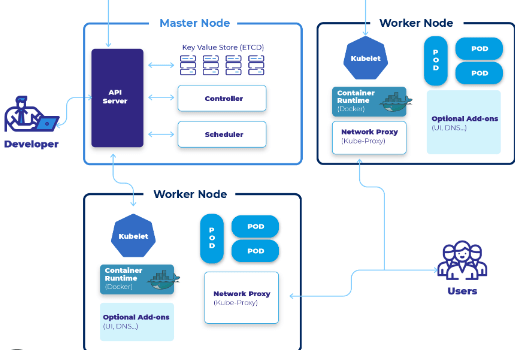
A Pod in Kubernetes is the smallest deployable unit, encapsulating one or more containers. Each Pod has its unique IP address, making it possible for the containers inside it to communicate with each other. However, Pods are ephemeral and can disappear and reappear with different IPs, which is why Services are essential.
🛠️ 2. Service: Stable Access Point for Pods
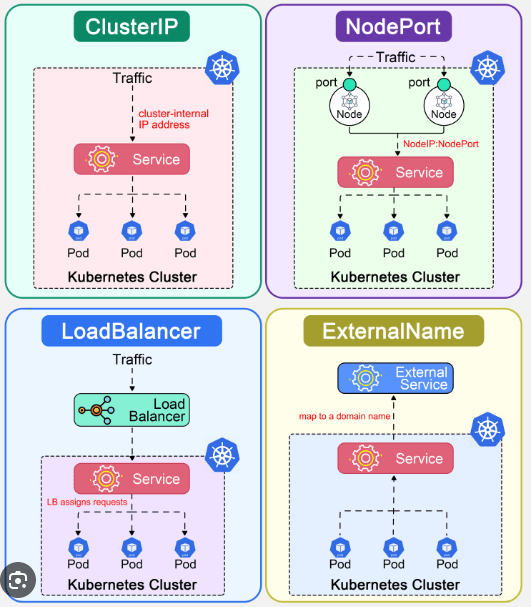
A Service is a stable, permanent endpoint that provides an IP address for a set of Pods, enabling seamless communication. Services abstract the Pods’ dynamic IPs and offer a consistent way to expose applications, which is particularly useful when Pods are regularly scaled or updated.
Types of Services
-
ClusterIP: Exposes the service within the cluster only (internal).
-
NodePort: Exposes the service on a specific port of each node (internal & external).
-
LoadBalancer: Integrates with external load balancers, ideal for production.
🚦 3. Route: Direct Traffic Through Rules
Routes are generally used in OpenShift (a Kubernetes distribution) to manage external traffic routing, where they define rules for accessing cluster services. This layer provides additional flexibility in handling traffic patterns while ensuring secure communication pathways.
🌐 4. Ingress: Advanced HTTP Routing for Kubernetes
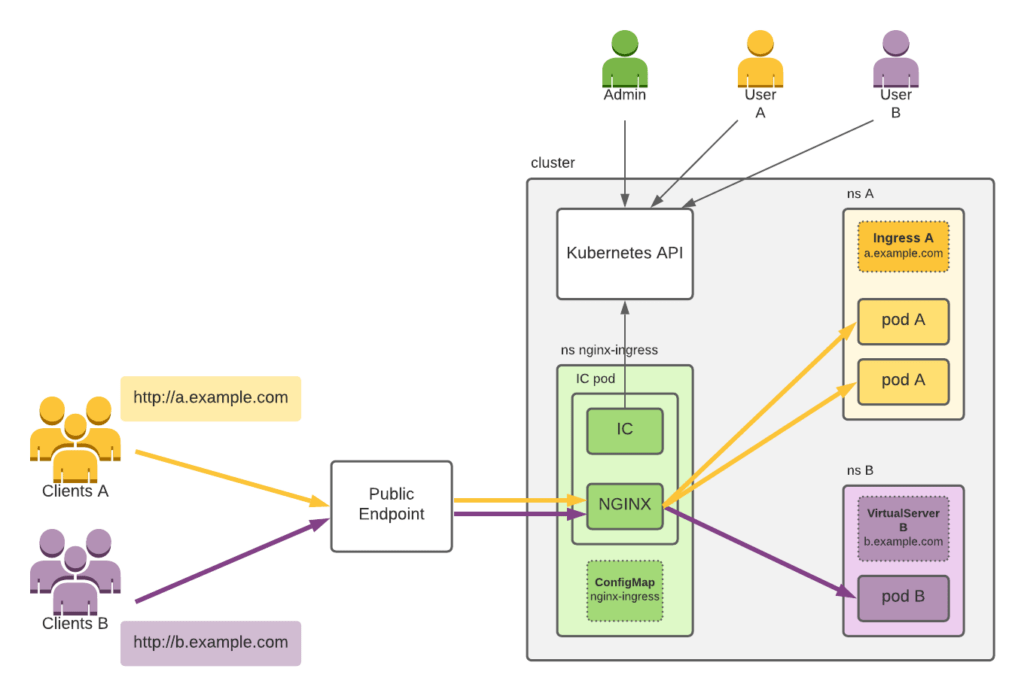
Ingress is an API object that manages external access, typically HTTP or HTTPS traffic, to services within the cluster. With Ingress Controllers (such as NGINX or Traefik), you can define custom routing rules, SSL termination, and manage subdomain-based traffic distribution.
Ingress Components
-
Ingress Controller: Handles the routing by interpreting Ingress rules.
-
Ingress Resource: Specifies the rules that govern routing for one or more Services.
🔗 How It All Works Together
-
User sends a request to an Ingress endpoint.
-
Ingress routes the request based on defined rules to the right Service.
-
The Service connects the request to a specific Pod hosting the application.
-
The Pod processes and responds back, following the route in reverse.
This layered approach provides flexibility in scaling, ensuring that your applications remain accessible and manageable.
📝 Visualizing Kubernetes Traffic Flow
-
Pod <-> Service <-> Ingress <-> External User
-
Each layer manages traffic to maximize efficiency, stability, and control.
References
https://www.solo.io/topics/nginx/kubernetes-ingress-controller/
https://www.clickittech.com/devops/kubernetes-architecture-diagram/
https://twitter.com/alexxubyte/status/1739690528709755060
🔗 Connect with me
-
💼 LinkedIn: https://www.linkedin.com/in/rifaterdemsahin/
-
🐦 Twitter: https://x.com/rifaterdemsahin
-
🎥 YouTube: https://www.youtube.com/@RifatErdemSahin
-
💻 GitHub: https://github.com/rifaterdemsahin
Imported from rifaterdemsahin.com · 2026