Why I Started Creating Environment Files with All Symbols in One File
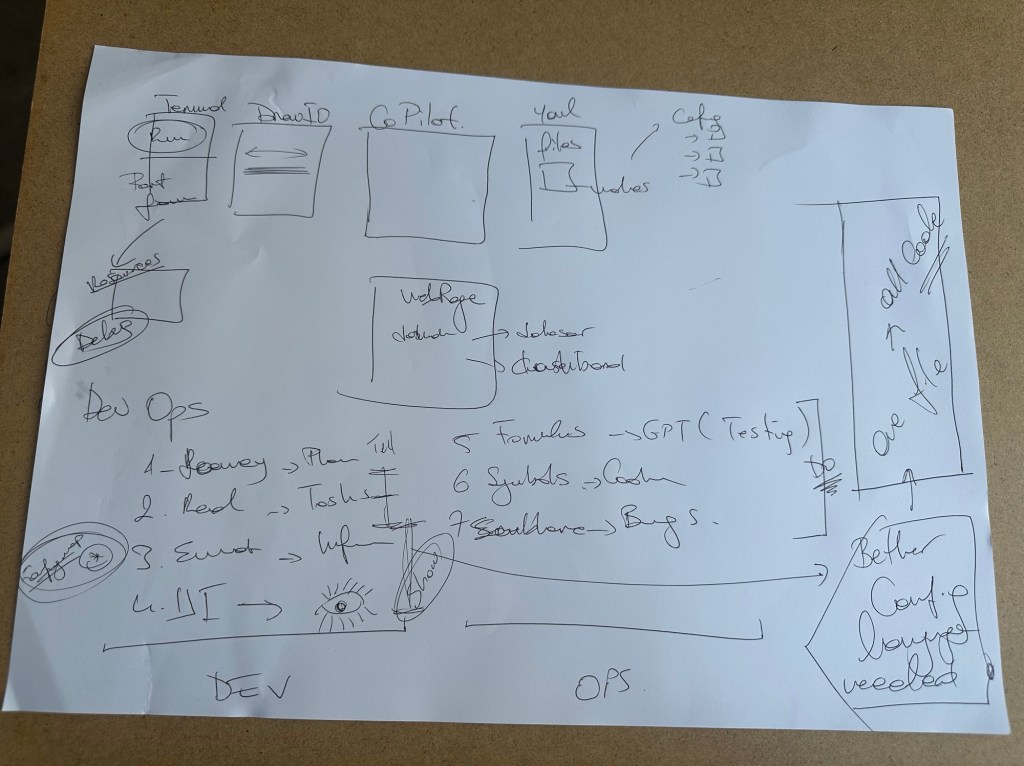
In my journey of building Delivery Pilot, a self-learning system designed to optimize workflows and empower decision-making, I discovered that managing environment configuration was one of the most underestimated yet critical challenges. To ensure consistency, scalability, and seamless self-learning capabilities, I began consolidating all symbols—environment variables, constants, and shared configuration values—into a single environment file. This approach has since become a core feature of Delivery Pilot. Here’s why I made this choice and why it’s worth considering for your own projects.
The Problem: Fragmented Configurations
In many projects, environment variables are scattered across multiple files or injected ad-hoc into specific components. This fragmentation leads to:
-
Inconsistency: Variables can differ across environments, causing unpredictable bugs.
-
Reduced Maintainability: Updating configurations often requires hunting across multiple files or pipelines.
-
Learning Curve for Systems: In self-learning systems like Delivery Pilot, missing or mismatched variables hinder the model’s ability to learn patterns and adapt effectively.
The Solution: A Single Source of Truth
To address these issues, I introduced an environment file that acts as the central repository for all symbols. Every variable that the system relies on—API keys, database URLs, feature toggles, or thresholds—is stored in this file. This creates a unified, predictable, and easily maintainable configuration structure.
Benefits for Delivery Pilot
- Improved Self-Learning
Delivery Pilot leverages its self-learning capabilities by observing patterns in data, configuration, and system behavior. Having all environment variables in one place ensures the system has full visibility into its operational context, enabling:
• Easier detection of anomalies.
• Faster adaptation to changing conditions.
- Simplified Debugging
With all symbols centralized, debugging becomes more intuitive. Engineers (and the system itself) can trace issues back to the exact configuration, minimizing time spent on troubleshooting.
- Consistency Across Environments
Delivery Pilot operates across development, staging, and production environments. A single environment file ensures consistency across these layers, reducing deployment errors and unexpected outcomes.
- Ease of Onboarding
New team members can quickly understand the project’s configuration by referring to one file. Similarly, Delivery Pilot’s self-learning algorithm can better interpret human-introduced changes, shortening the learning curve for the system itself.
- Scalability and Reproducibility
By centralizing symbols, it becomes straightforward to scale Delivery Pilot to additional use cases or environments. Whether adding a new feature or deploying to a new region, the process is reproducible and reliable.
Implementing the Single Environment File
If you’re considering adopting a similar approach, here are a few steps to get started:
-
Define the File Structure: Use a consistent and logical format, such as .env or a JSON/YAML configuration file.
-
Standardize Naming Conventions: Make variable names descriptive and consistent to improve readability and reduce errors.
-
Version Control: Store the environment file in a secure and version-controlled system, ensuring changes are tracked and auditable.
-
Secure Sensitive Data: For sensitive variables (e.g., API keys), integrate secrets management tools like AWS Secrets Manager or HashiCorp Vault to avoid hardcoding.
Conclusion
Creating an environment file with all symbols in one place has been transformative for Delivery Pilot. It simplifies development, enhances the self-learning engine, and sets the foundation for consistent and reliable deployments. Whether you’re building a self-learning system or managing a complex application, this practice can significantly reduce headaches while boosting scalability and maintainability.
As Delivery Pilot evolves, this simple yet powerful feature continues to prove its value, serving as a cornerstone for efficient and adaptive workflows.
Imported from rifaterdemsahin.com · 2025