Managing Cloud Costs with DigitalOcean: A Case Study > Poc Cost With Terraform
As cloud infrastructure becomes increasingly essential for developers, startups, and enterprises alike, managing cloud costs effectively is more important than ever. In this blog post, we’ll walk through a practical example of how to monitor and manage cloud costs using DigitalOcean. This case study is based on a real project, highlighting the tools and strategies used to keep expenses under control.
The Importance of Cloud Cost Management
With cloud platforms like DigitalOcean, it's easy to spin up new resources in a matter of minutes. However, this convenience can lead to unintended expenses if costs are not carefully monitored. In cloud computing, every droplet, database, and storage volume carries a cost, and without vigilant monitoring, these can add up quickly.
Case Study Overview
In this example, we’ll look at a project managed on DigitalOcean with multiple resources, including virtual machines (Droplets). The goal is to track and optimize the expenses associated with these resources over time.
Current Billing Overview
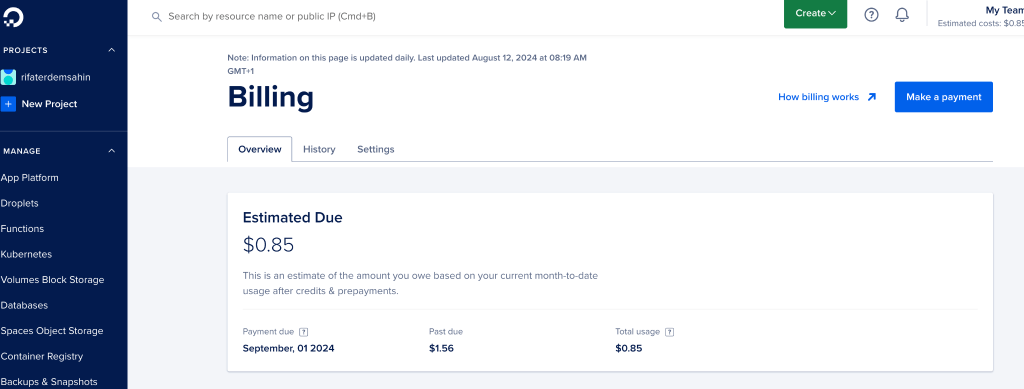
As of August 12, 2024, the project’s billing dashboard shows:
-
Estimated Due: $0.85
-
Past Due: $1.56
-
Total Usage: $0.85
This indicates that while the current month's usage is minimal, there is a small amount past due from previous billing cycles. This scenario is common in projects where resources might be left running after their active use, leading to ongoing charges.
Detailed Billing Breakdown
Let’s dive into the specifics. The project includes a series of Droplets, each representing a virtual machine running specific applications. Here's a snapshot of the usage:
ProductDescriptionStart TimeEnd TimeCost (USD)Dropletskibana-0 (s-1vcpu-2gb)2024-08-11 13:14:00 +00002024-08-11 13:40:24 +0000$0.02Dropletskibana-1 (s-1vcpu-2gb)2024-08-11 13:14:00 +00002024-08-11 13:40:24 +0000$0.02Dropletskibana-0 (s-1vcpu-2gb)2024-08-11 13:43:46 +00002024-08-11 13:46:31 +0000$0.02Dropletskibana-1 (s-1vcpu-2gb)2024-08-11 13:43:45 +00002024-08-11 13:46:32 +0000$0.02
These charges are minimal but consistent, demonstrating the importance of tracking even the smallest usage to avoid unexpected bills at the end of the month.
Strategies for Reducing Costs
-
Regular Audits: Regularly reviewing your DigitalOcean dashboard can help identify any unused or underused resources that can be deleted or resized. In this case, if the Kibana instances are no longer needed, they should be stopped or deleted.
-
Automated Alerts: Set up automated alerts within DigitalOcean to notify you when your spending reaches a certain threshold. This proactive approach allows you to take action before costs spiral out of control.
-
Optimize Resource Usage: Analyze your workload and choose the right droplet sizes and storage solutions. For example, if your application doesn't require high CPU usage, opting for a more affordable droplet size can save costs.
-
Leverage Prepaid Credits: If you have past due amounts, consider using DigitalOcean credits or prepayments to offset those charges. It’s also a good idea to periodically review any promotions or discounts that may apply to your account.
Conclusion
Managing cloud costs effectively requires a balance of regular monitoring, strategic resource allocation, and proactive optimization. By closely tracking expenses and making informed decisions, you can maintain a cost-effective cloud environment without compromising on performance or scalability.
In this DigitalOcean case study, we've demonstrated how even small projects can benefit from diligent cost management. Whether you’re a solo developer or part of a larger team, these practices will help you make the most of your cloud infrastructure while keeping your budget in check.
This blog post serves as both a guide and a real-world example of managing cloud costs with DigitalOcean. It’s designed to help other developers and teams apply these strategies to their own projects, ensuring a smooth and cost-effective cloud experience.
Reference
https://github.com/rifaterdemsahin/kibanasandbox/blob/main/costs.txt
Imported from rifaterdemsahin.com · 2025