🚀 Why Creating More Subclips is More Work in Video Production 🎥
Working in video production means crafting stories that are clear, concise, and visually appealing. However, producing each subclip adds a layer of complexity that can make the process far more intricate than it might seem. Every subclip requires careful attention to framing, in and out points, and—if your production pipeline gets updated—these tasks need revisiting and fine-tuning. Let’s dive into the details of why subclips can complicate things and how to manage these challenges in a fast-paced production environment.
🛠️ Framing: Finding the Perfect Shot Every Time
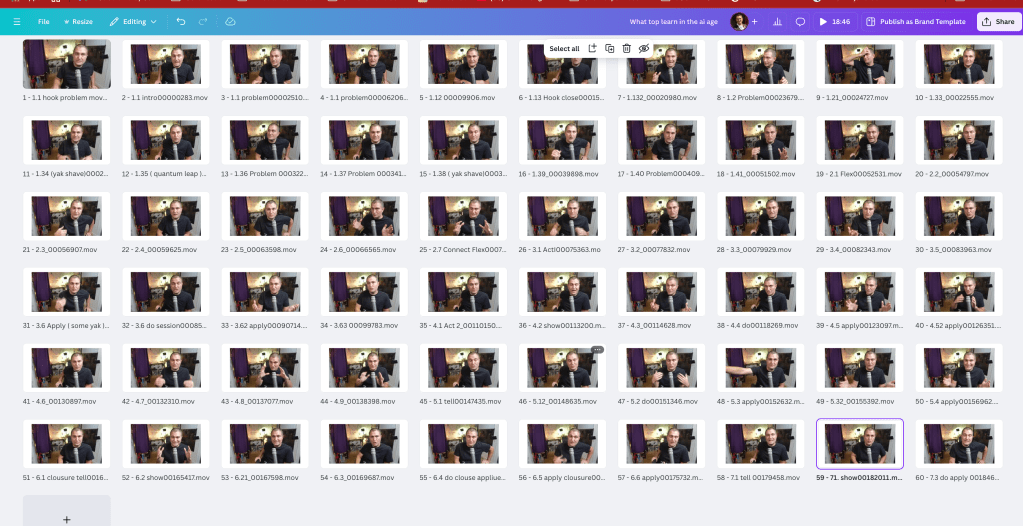
Each subclip demands its own framing and composition to be visually engaging and aligned with the story. This is especially true if you're switching between multiple camera angles or varying perspectives. For each segment, we must:
-
🖼️ Adjust the framing to maintain focus on the subject.
-
🔄 Ensure the visual composition aligns with the narrative flow.
Every frame is critical in conveying the message and maintaining consistency, which can easily add extra work to the production pipeline.
⏯️ In and Out Points: Defining the Story's Rhythm
Defining the in and out points is essential for subclips. These points determine where each clip starts and stops, setting the rhythm and pacing of the entire video. This task requires:
-
🎬 Careful selection of starting and ending frames.
-
🕰️ Double-checking that transitions between clips are smooth and avoid abrupt cuts.
Each adjustment here means revisiting the timeline and ensuring every clip fits seamlessly within the flow of the story.
🔄 Pipeline Updates: Reworking Every Clip from Scratch
Every time we update the production pipeline—whether it's due to new editing software, added effects, or simply a shift in style—we need to revisit each step, including:
-
🔍 Re-evaluating each subclip’s in and out points.
-
🔧 Adjusting framing to fit new requirements.
-
📅 Rethinking the timeline, as updated elements can shift schedules and delay production.
This not only affects the current project but often requires reshuffling future timelines to accommodate the updated workflow. Every change compounds the workload, making it crucial to be efficient and strategic with updates.
📈 Streamlining the Process: Tips for Managing More Subclips
-
Batch Edits 📦: Where possible, work on multiple clips in one go, applying similar framing and timing adjustments across batches.
-
Automated Tools 🤖: Use automation for repetitive tasks like adjusting in/out points based on visual markers, which saves time.
-
Template-Based Framing 📐: Create framing templates for consistent compositions across similar clips, especially when using multiple camera angles.
By staying organized and leveraging the right tools, creating subclips can become more manageable, even when the production pipeline gets an update.
With every subclip, we’re telling a part of the story. It’s worth the effort, but understanding the time and precision involved can help make the process smoother, keeping production schedules on track without compromising quality.
🔗 Connect with me:
-
💼 LinkedIn: https://www.linkedin.com/in/rifaterdemsahin/
-
🐦 Twitter: https://x.com/rifaterdemsahin
-
🎥 YouTube: https://www.youtube.com/@RifatErdemSahin
-
💻 GitHub: https://github.com/rifaterdemsahin
Stay tuned for more insights on video production! 🎬📹
Imported from rifaterdemsahin.com · 2024