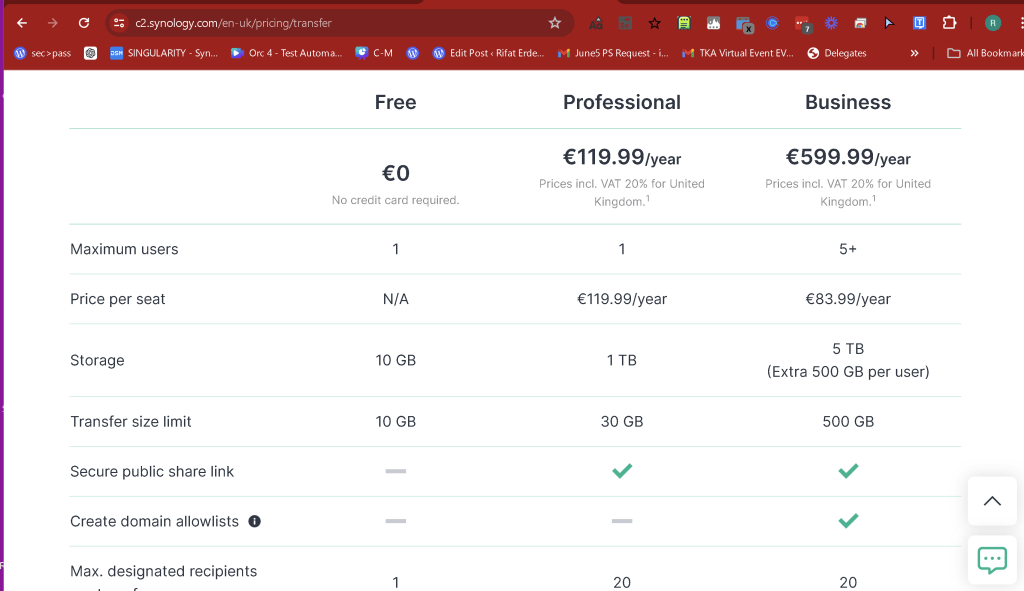
600 dollars to store it all
NAS use cases are getting extended
Network Attached Storage (NAS) can be an extremely useful tool in a variety of use cases, particularly for individuals and organizations dealing with large amounts of data. Here are some potential use cases based on the provided suggestions:
-
Keep the Raw Footage:
-
Use Case: Video production and photography.
-
Details: NAS can be used to store raw footage from cameras and other recording devices. This is particularly useful for videographers, filmmakers, and photographers who need to store large volumes of high-resolution content.
-
Extra Local Backup:
-
Use Case: Data redundancy and disaster recovery.
-
Details: NAS serves as an additional local backup to complement other backup solutions. It ensures that critical data is protected and can be quickly restored in case of hardware failure, accidental deletion, or other data loss incidents.
-
Push the Data to Storage:
-
Use Case: Data archiving and centralized storage.
-
Details: NAS can act as a central repository where data from multiple devices and users can be pushed and stored. This is useful for organizations that need a centralized location for all their data, facilitating easier data management and access.
-
Be Ready to Lose All the Data:
-
Use Case: Non-critical data storage.
-
Details: For non-sensitive and non-critical data, NAS can be used with the understanding that losing the data won't be catastrophic. This is suitable for storing temporary files, non-essential downloads, or data that can be easily recreated or re-downloaded.
-
Not Saving the Sensitive Data There:
-
Use Case: Ensuring data security and privacy.
-
Details: Sensitive and confidential data should not be stored on NAS unless proper security measures are in place. This ensures that in the event of a NAS security breach, sensitive information remains protected. This practice is crucial for compliance with data protection regulations and maintaining privacy.
Summary
-
Creative Professionals: Use NAS for storing large volumes of raw footage and media files.
-
IT and Data Management: Utilize NAS for extra local backups to enhance data redundancy and recovery options.
-
Centralized Data Storage: Organizations can push data to NAS for centralized storage and easier management.
-
Temporary and Non-critical Data: Store data that isn't critical or sensitive, being prepared for potential data loss.
-
Sensitive Data Management: Avoid storing sensitive data on NAS unless robust security measures are implemented.
By aligning NAS usage with these use cases, you can maximize its benefits while minimizing risks.
FOCUS ON MAIN CASES
-
SMB folder and move the footage there ( Main Issue )
-
Google Drive Sync
Imported from rifaterdemsahin.com · 2024