New Keywords coming in
OpenTofu is an open-source software project designed for managing cloud infrastructure.>>> Cloud formation alternative, terraform alternative,It provides a tool for defining, provisioning, and managing infrastructure as code (IaC). OpenTofu is part of the broader movement towards IaC, where infrastructure is treated in a similar manner to application code, allowing for version control, testing, and automation.
Here are some key features and benefits of OpenTofu:
-
Infrastructure as Code: Allows users to define their infrastructure using code, which can be stored in version control systems like Git. This helps in maintaining consistency, reducing errors, and improving collaboration.
-
Cloud-Agnostic: Supports multiple cloud providers, enabling users to manage resources across different cloud environments from a single platform.
-
Declarative Configuration: Users declare the desired state of their infrastructure, and OpenTofu takes care of the necessary steps to achieve that state. This simplifies the management of complex infrastructure.
-
Resource Management: Provides capabilities for managing a wide range of resources, including virtual machines, storage, networking, and more.
-
Automation: Automates the provisioning and management of infrastructure, which can save time and reduce manual errors.
-
Community and Ecosystem: As an open-source project, it benefits from contributions from a community of developers and users, leading to continuous improvements and updates.
OpenTofu is particularly useful for organizations looking to improve their infrastructure management practices, streamline operations, and adopt DevOps methodologies. It competes with other IaC tools like Terraform, Pulumi, and Ansible, each with its own set of features and ecosystem.
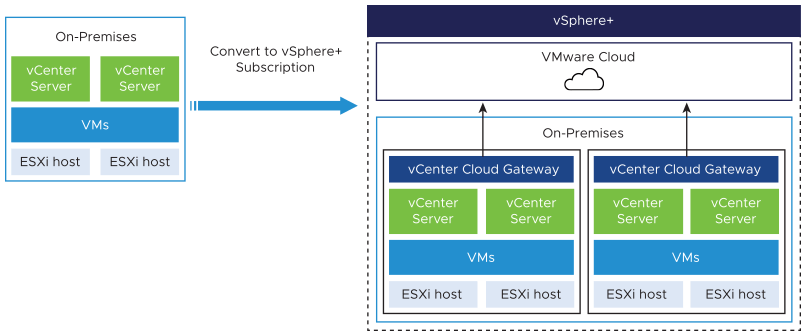
VMware vSphere is a leading server virtualization platform developed by VMware. It enables the creation and management of virtual machines (VMs) on physical servers, providing a robust and scalable environment for deploying and running applications. Here are some key aspects and features of VMware vSphere:
-
Hypervisor:
-
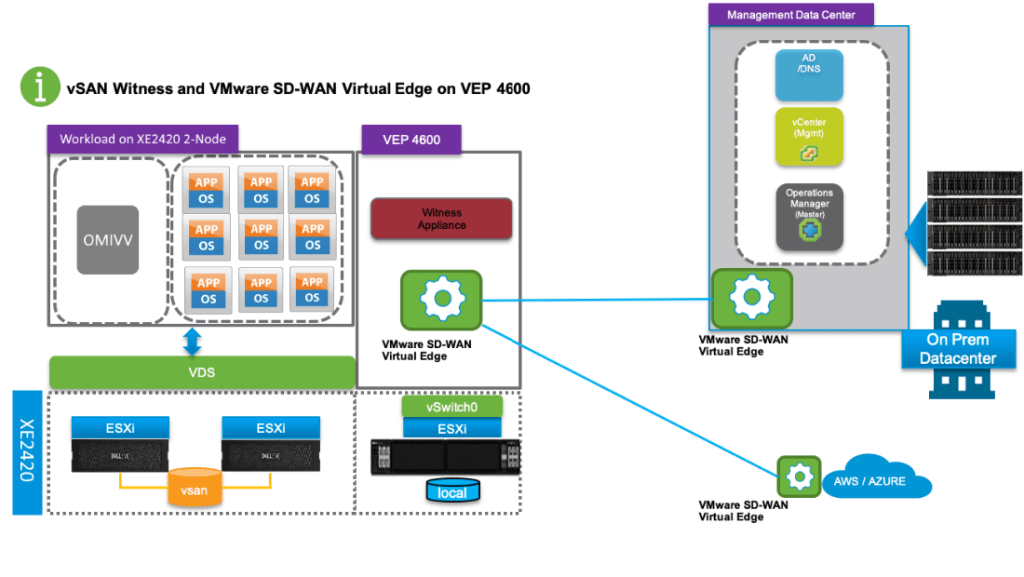
ESXi: vSphere includes the ESXi hypervisor, a type-1 hypervisor that runs directly on server hardware, providing a robust, secure, and high-performance foundation for virtual machines.
-
Management Console:
-
vCenter Server: vCenter Server is the centralized management platform for vSphere environments. It allows administrators to manage multiple ESXi hosts and VMs from a single interface, offering features like VM provisioning, monitoring, and resource management.
-
Virtualization:
-
VM Creation and Management: vSphere enables the creation, configuration, and management of VMs. Each VM can run its own operating system and applications, providing flexibility and isolation.
-
Resource Optimization:
-
vMotion: Allows live migration of VMs between hosts with no downtime, ensuring continuous availability and load balancing.
-
Distributed Resource Scheduler (DRS): Automatically balances VM workloads across hosts to optimize resource utilization.
-
Storage DRS: Manages and optimizes storage resources by balancing VM storage needs across datastores.
-
High Availability and Fault Tolerance:
-
vSphere High Availability (HA): Provides automatic restart of VMs on other hosts in the event of a hardware failure.
-
vSphere Fault Tolerance (FT): Ensures continuous availability of VMs by creating a live shadow instance that can take over without interruption if the primary VM fails.
-
Security:
-
VM Encryption: Supports encryption of VM data both at rest and in transit.
-
Role-Based Access Control (RBAC): Provides fine-grained access control to ensure that only authorized users can perform specific actions.
-
Networking:
-
vSphere Distributed Switch (VDS): Offers centralized management of network configurations and policies across multiple hosts.
-
NSX Integration: Enhances networking capabilities with advanced features like micro-segmentation, network virtualization, and security.
-
Storage:
-
vSAN: VMware’s software-defined storage solution that integrates with vSphere, providing scalable, high-performance storage for VMs.
-
Storage Policies: Allows administrators to define storage requirements and automatically enforce them across the environment.
-
Automation and Orchestration:
-
vRealize Suite: Integrates with vSphere to provide automation, monitoring, and lifecycle management for virtualized environments.
-
APIs and SDKs: Supports integration with various tools and scripts for custom automation solutions.
-
Cloud Integration:
Hybrid Cloud: vSphere integrates with VMware Cloud on AWS and other public cloud providers, enabling seamless hybrid cloud deployments.
- vCloud Director: Allows service providers to build and manage multi-tenant cloud environments.
VMware vSphere is widely used in enterprise environments to consolidate server workloads, improve resource utilization, and enhance operational efficiency. Its comprehensive feature set and robust ecosystem make it a critical component for modern data center and cloud infrastructure management.
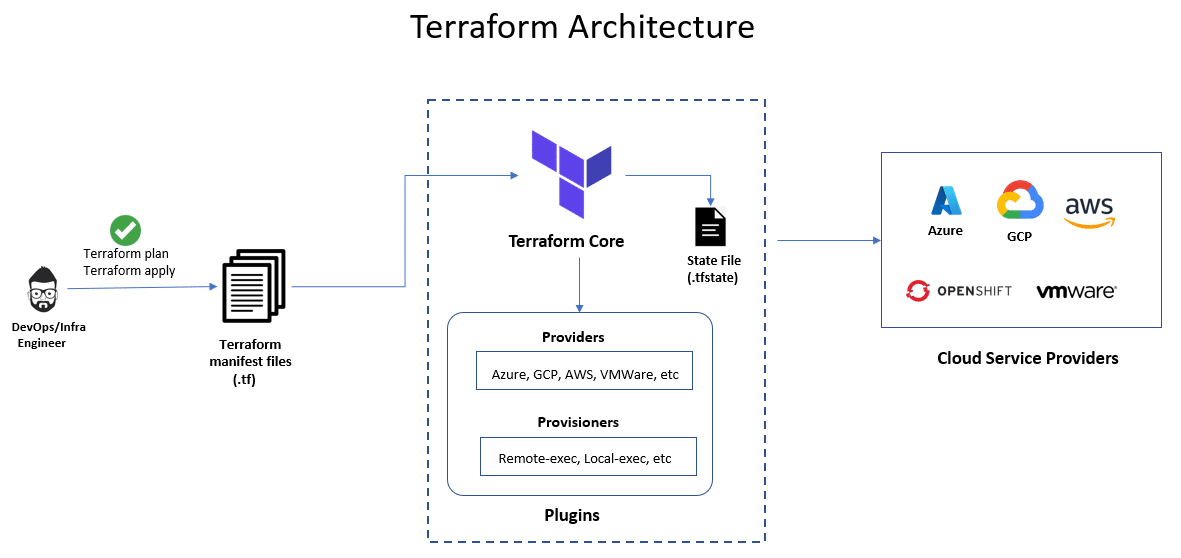
OpenTofu (previously Terraform) is used for infrastructure as code to provision and manage cloud and on-premise resources. Here's an example of an OpenTofu configuration for provisioning an AWS EC2 instance:
-
Install OpenTofu:
First, ensure you have OpenTofu installed. You can install it following the instructions on the official OpenTofu website. -
OpenTofu Configuration Example:
Create a directory for your OpenTofu configuration files. Inside this directory, create a file namedmain.tfwith the following content:
main.tf
provider "aws" {
region = "us-west-2"
}
resource "aws_instance" "example" {
ami = "ami-0c55b159cbfafe1f0" # Amazon Linux 2 AMI
instance_type = "t2.micro"
tags = {
Name = "ExampleInstance"
}
}
- Initialize the OpenTofu Configuration:
Open a terminal, navigate to the directory containingmain.tf, and run:
opentofu init
- Apply the Configuration:
Apply the configuration to create the resources:
opentofu apply
You will be prompted to confirm the action. Type yes to proceed.
-
Verify the Deployment:
After the apply completes, OpenTofu will output information about the created resources. You can also check the AWS Management Console to verify the instance has been created. -
Destroy the Resources:
To clean up and destroy the resources, run:
opentofu destroy
Again, you will be prompted to confirm the action. Type yes to proceed.
This is a simple example to get you started with OpenTofu. You can extend this configuration to include more complex resources and dependencies as needed for your infrastructure.
GitOps Summary
GitOps is a set of practices that uses Git repositories as the source of truth for the desired state of a system. Here’s a concise summary of its key principles and benefits:
Key Principles:
-
Declarative Descriptions:
-
Systems are defined declaratively (e.g., Kubernetes manifests, Terraform files).
-
Version Control:
-
All configuration files and application code are stored in Git repositories. Every change is tracked, enabling version control, auditability, and easy rollbacks.
-
Automated Deployment:
-
Changes pushed to the Git repository automatically trigger deployment pipelines that update the system to match the desired state described in the repository.
-
Continuous Reconciliation:
-
An agent (e.g., Flux, ArgoCD) continuously monitors the Git repository and the actual system state, reconciling any drift between the two.
Benefits:
-
Consistency and Reliability:
-
Ensures that the system's state is always consistent with the desired state defined in Git, reducing configuration drift and errors.
-
Auditability and Compliance:
-
All changes are logged in the Git history, providing a clear audit trail and facilitating compliance with regulatory requirements.
-
Collaboration and Transparency:
-
Encourages collaboration among team members as changes are proposed, reviewed, and merged via standard Git workflows (e.g., pull requests).
-
Automation:
-
Reduces manual intervention and the potential for human error through automated deployments and continuous reconciliation.
-
Disaster Recovery and Rollbacks:
-
Simplifies disaster recovery and rollback procedures, as reverting to a previous state is as simple as reverting a commit in Git.
Use Cases:
-
Kubernetes Deployments: Automating the deployment of containerized applications.
-
Infrastructure as Code (IaC): Managing infrastructure changes using tools like Terraform or AWS CloudFormation.
-
Configuration Management: Keeping application and system configurations consistent and versioned.
In summary, GitOps leverages the power of Git for managing and automating infrastructure and application deployments, ensuring a reliable, auditable, and collaborative workflow.
Imported from rifaterdemsahin.com · 2024