Cognitive Styles and Problem Oriented people approach
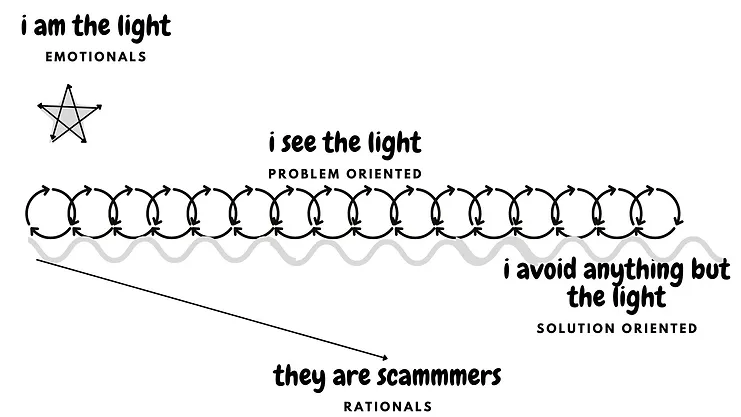
The contrast between problem-oriented and solution-oriented individuals, as exemplified through the approaches of Ali Abdaal and Erdem in video creation, illustrates a broader theme that transcends industries and disciplines. This dichotomy isn't just about how individuals solve problems; it's about their mindset towards obstacles and opportunities, affecting their journey towards their goals.
Ali Abdaal's approach, characterized by finding efficient processes and then scaling them, reflects a solution-oriented mindset. This method focuses on achieving goals with the least resistance, prioritizing efficiency and effectiveness. It's a testament to the principle that once a viable solution is found, the focus should shift towards optimization and application to other areas. In contexts like entrepreneurship, where time and resources are often limited, this approach can be particularly valuable. It allows for quick iterations, enabling businesses to grow rapidly by doubling down on what works.
Conversely, Erdem's inclination to dive deep into problems, exploring multiple tools and understanding the nuances of each, signifies a problem-oriented approach. This method thrives on curiosity and a deep desire to understand the 'why' behind the 'what.' It's an approach that values the journey as much as the destination, believing that true innovation comes from thorough understanding and exploration. In fields like science and research, where the goal is to expand human knowledge and solve complex problems, this approach is crucial. It fosters innovation and can lead to groundbreaking discoveries that might not have been achieved through a more direct, solution-focused approach.
However, it's important to recognize that neither approach is inherently superior. Each has its place, and the effectiveness of each depends largely on the context and the specific goals at hand. For instance, a solution-oriented approach might be more suited to a startup looking to quickly capture market share, while a problem-oriented approach could be more beneficial for a research team aiming to solve a complex scientific mystery.
The key takeaway is the importance of flexibility and self-awareness in problem-solving. By understanding their own inclinations towards being problem-oriented or solution-oriented, individuals can adapt their approach to better suit their goals. Moreover, in collaborative settings, valuing both perspectives can lead to a more comprehensive and effective problem-solving strategy, as each approach brings unique strengths and insights to the table.
In the end, success in any endeavor, whether it's video creation, entrepreneurship, or scientific research, comes down to the ability to adapt, learn, and leverage one's natural tendencies towards problem-solving. Ali Abdaal and Erdem's successes underscore the point that there isn't a one-size-fits-all approach to achieving goals; rather, it's about finding the balance that works for you and your unique circumstances.
Reference
https://www.canva.com/design/DAFUP4xf65E/Ix5tddg4fAyLZcxtt6x2bQ/edi
Imported from rifaterdemsahin.com · 2024